
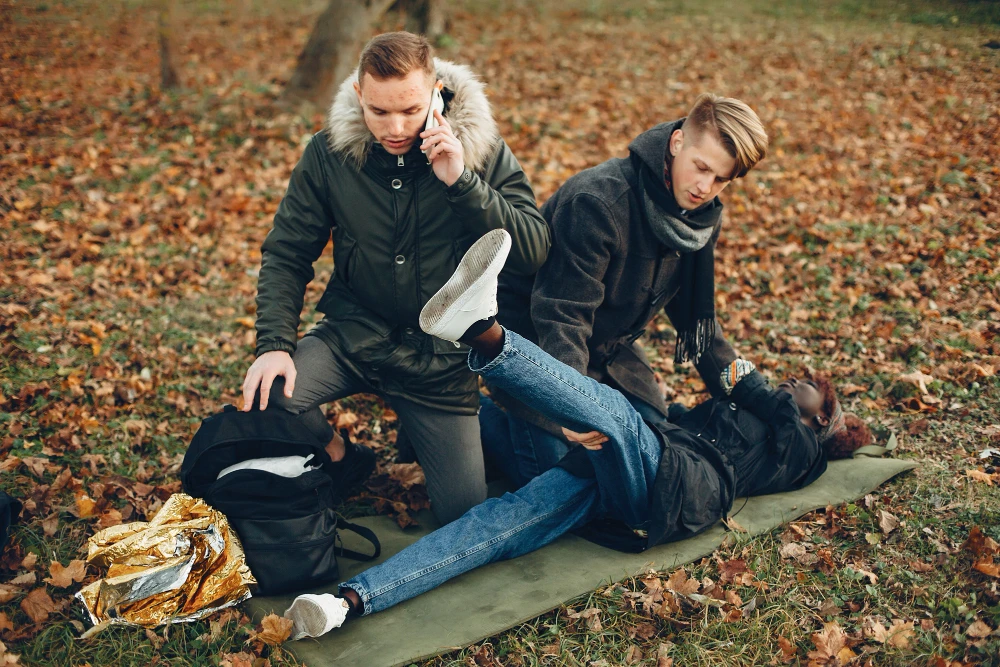
Slick Patios and Faulty Lights: What Do I Need to Prove Liability in an Arizona Holiday Slip-and-Fall Case?
The holidays are supposed to be filled with cheer and goodwill. But sometimes, a simple, fun night out turns into a trip to the emergency room.
We see a hidden danger spike every December: slip-and-fall accidents. Why? Because we have more crowds, more decorations, more spills, and sometimes, unexpected weather. A simple fall on a wet walkway or a loose Christmas light cord can lead to broken bones or serious head injuries.
We want you to know that if you get hurt on someone else’s property—whether it’s a big store near me or a neighbor’s house—it is not always your fault. The law makes property owners responsible for keeping their space safe.
This article is your guide to understanding the rules of premises liability in Arizona. We’ll show you what facts matter, how to protect your rights, and the best steps to take after an accident during the holiday rush.
1. The Hidden Dangers of December: Why Accidents Spike
Most people think of car crashes during the holidays, but slip-and-fall accidents are far more common than you realize. They often happen because of temporary hazards that pop up just for the season.
The Three Unique Holiday Hazards That Cause Falls
- Festive Overload and Clutter: Malls, stores, and even homes put up temporary displays, extension cords, and decorations that cross walkways. That beautiful, oversized sleigh prop becomes a major trip hazard if it sticks out too far into the aisle.
- Unexpected Moisture: We may be in the Arizona desert, but December brings cold mornings. In Bullhead City, Kingman, or Lake Havasu, a patio that was just wet with rain or spilled eggnog can suddenly have a slick, icy patch from overnight cold.
- The Shopping Rush: Crowds create speed. When people are rushing to find the best last-minute gift, they are looking at their phones, not the wet floor sign that was just knocked over.
The Little-Known Injury Stat: It’s Not Just Broken Bones
The public health data on falls is shocking.
- Stat You Need to See: While the Centers for Disease Control and Prevention (CDC) notes that falls are a leading cause of injury for many age groups, a less-talked-about issue is Traumatic Brain Injury (TBI). A fall from standing height, especially backward, is a common cause of concussions and TBIs. If you hit your head on a hard surface after slipping on an icy step or loose wire, the injury can be lifelong.
This is why a slip-and-fall case is often serious. It’s not just a bruise; it can be an injury that changes your life forever.
Who is Responsible? The Duty of Care
In Arizona, property owners—whether a homeowner, store, or landlord—have a duty of care. This is a legal way of saying they must take reasonable steps to keep their property safe for visitors.
- The Best Definition: If they know about a hazard, or should have known about a hazard, and failed to fix it or warn you, they may be legally responsible for your fall.
Internal Link Opportunity: A slip-and-fall case is part of the larger area of Personal Injury Law. Understanding the rules of negligence is the first step in proving your case.
2. Proving the Owner Was at Fault: Negligence is Key
To win a holiday slip-and-fall case in Arizona, you can’t just say, “I fell.” You have to prove the property owner was negligent.
The Four Facts You Must Prove to Win Your Case
Proving negligence means you have to show four specific things. We call these the elements of premises liability:
- Duty: The property owner had a duty to keep the area safe (easy to prove if you were a legal visitor).
- Breach: The owner failed in that duty (This is the failure to fix the hazard).
- Causation: The breach directly caused your fall.
- Damages: You suffered measurable harm (medical bills, lost wages).
The hardest part is proving Breach. You must show that the owner knew about the danger and didn’t act.
Did They Know? The “Notice” Requirement
How do you prove a store in Lake Havasu knew their walkway was slick? There are two best ways to prove “notice”:
- Actual Notice: The owner or an employee knew the hazard existed. Maybe a customer complained, or an employee saw a spilled drink ten minutes before you slipped.
- Constructive Notice: The owner should have known the hazard existed because it was there for a long time. For example, if a broken decoration light cord had been lying across the front entrance for two hours, they had enough time to notice and fix it.
- The Best Evidence: We look for maintenance logs, incident reports, and surveillance video (if available near me). We want to find a security video showing the hazard was there long enough for a reasonable person to clean it up.
Stat to Note: Studies on commercial premises liability show that the average time a temporary liquid hazard remains on the floor in a busy retail environment is only about 15 to 30 minutes before someone slips. This tiny window of time is what makes quick documentation so important!
3. Your Immediate Steps: Protecting Your Legal Case
If you or a loved one falls on someone else’s property during the holidays, what you do in the first 60 minutes is more valuable than anything an attorney can do a week later.
What Is the Best Way to Document a Slip-and-Fall Accident?
- Get Help, But Stay Put: If you are seriously hurt, call 911 immediately. If you can, try to remain at the scene. This helps you gather facts and keeps the scene unchanged.
- Take Photos (The Crucial Step): Use your phone right away. This is the best evidence you can get.
- Take photos of the hazard itself (the loose wire, the ice patch, the spilled product).
- Take photos of the area around the hazard to show lighting and proximity to doors.
- Take a photo of your shoes and clothes.
- Identify Witnesses: Look around for anyone who saw you fall or who saw the hazard before you fell. Get their names and phone numbers. Do not rely on the store to give you this information.
- Report the Incident: Ask to speak to a manager and insist on filling out an Accident Report. Get a copy of the report, even if they pressure you not to take one. Do NOT say “I am fine,” as your adrenaline might be masking an injury. Just state the facts of what happened.
Why You Must Watch Out for Arizona’s Comparative Fault Rule
Arizona follows a rule called Pure Comparative Fault. This is an important detail for everyone in Bullhead City to know:
- This rule means you can still recover money even if the accident was partly your fault.
- Example: If you slipped on a wet patio and a jury decides the property owner was 70% at fault for not putting up a wet floor sign, but you were 30% at fault because you were looking at your phone, you can still collect 70% of the total compensation.
The property owner’s insurance company will immediately try to argue that you were 100% at fault (you were distracted, you were wearing the wrong shoes). That’s where our job begins—to prove their percentage of fault was much higher.
Internal Link Opportunity: Accidents often result in big medical bills and time off work. If you are hurt and missing income, you need to understand how we calculate compensation for [Lost Wages and Damages] (https://www.google.com/search?q=https://lawyersinarizona.com/legal-practice-areas-bullhead-city-az/).
4. The Homeowner’s Trap: Accidents at Holiday Parties
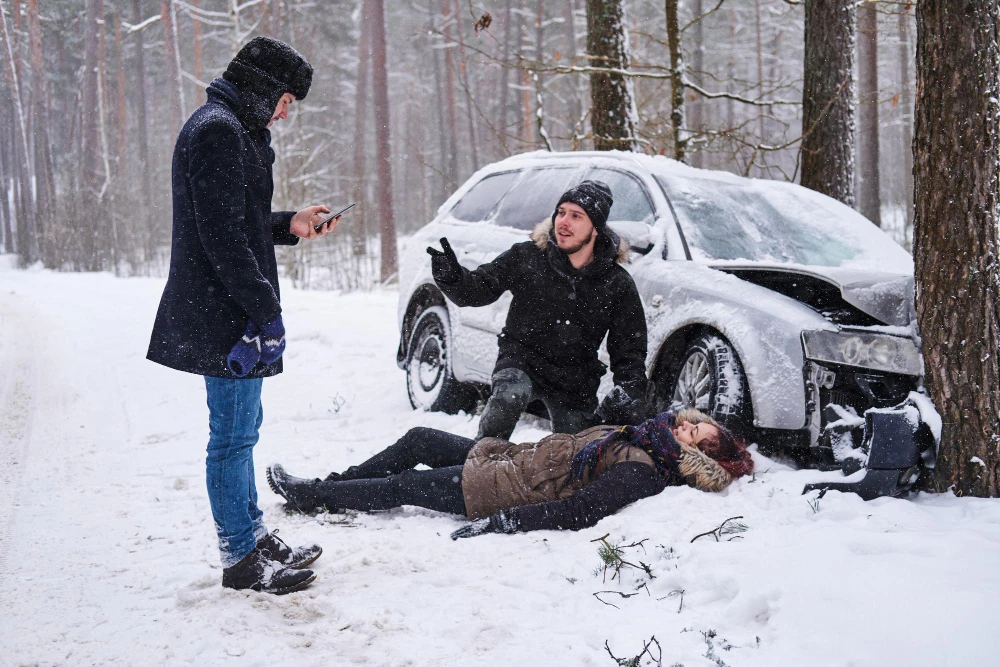
What if you slip and fall at a friend’s Christmas party or a neighbor’s house in Kingman? The same rules of premises liability apply, but the law treats visitors differently.
The Three Types of Visitors and Their Rights
Arizona law divides visitors into three groups, and the owner’s duty changes for each:
- Invitees (Highest Duty): This includes customers at a store or guests at a party you are hosting for business. The owner has the best duty to check for and fix hidden dangers.
- Licensees (Medium Duty): This includes social guests, like friends or neighbors invited to a Christmas party. The owner only has to warn you about dangers they know about (e.g., “Don’t go on the back patio, the railing is loose”).
- Trespassers (Lowest Duty): Someone on the property without permission. The owner only owes a duty not to intentionally harm them.
If you fall at a neighbor’s party in Lake Havasu, you are likely a Licensee. You must prove the homeowner knew about the hazard (like that broken step or faulty light). This is why a simple fall case often comes down to the homeowner’s insurance policy.
Stat to Note: Data from major insurance companies indicates that dog bites and fall accidents are the two most frequent types of liability claims made against standard homeowner’s insurance policies, with a distinct rise in fall claims during the winter months due to decorations and weather hazards.
Key Takeaways from Knochel Law Firm
After over 40 years of handling personal injury cases in Mohave County, here are the most important things Keith and Aline want you to remember about holiday slip-and-fall cases:
- It’s About Notice: The whole case comes down to proving the owner knew (or should have known) the hazard existed before you fell.
- Photo Evidence is the Best: The best thing you can do is take immediate photos of the hazard and the area before anything is moved or cleaned up.
- Be Careful What You Say: Never say “I’m sorry” or “I’m fine” at the scene. It can be used by the insurance company to argue you admitted fault or weren’t really hurt.
- Arizona’s Comparative Fault: Even if you were partly at fault (e.g., 20%), you can still win compensation for the percentage the property owner was responsible (e.g., 80%).
- Get Medical Attention: Your health is the priority, and the medical documentation is the only proof of your injury the court accepts.
5. Common Questions for Bullhead City Area Personal Injury Lawyers
Here are the five most common questions we get asked by people facing a holiday slip-and-fall claim in the Bullhead City, Kingman, and Lake Havasu areas:
1. I fell at a big-box store near me. Does the store have to pay for my ambulance ride?
Answer: Not right away. The store’s obligation is to its insurance company, not directly to you. In Arizona, the store is only legally required to pay your medical bills and other damages if their negligence is proven. We send a demand letter to their insurance company, and if they refuse to pay, we file a lawsuit to prove their fault in court.
2. The store manager told me they will pay my medical bills. Should I trust them?
Answer: No. The manager is often just trying to prevent you from getting an attorney. They may offer a small settlement check right away, but if you cash it, you are likely giving up your right to sue for future pain, suffering, and long-term medical care. The best action is to accept no money and sign no paperwork until an experienced personal injury attorney reviews your full rights.
3. I fell on a sidewalk in front of someone’s house in Kingman. Is the homeowner responsible for that sidewalk?
Answer: This depends entirely on where the sidewalk is located. If it is a public city sidewalk or a path controlled by an HOA, the homeowner might not be responsible. If the fall happened on a private walkway, a public sidewalk damaged by the homeowner’s actions, or a path leading directly to the front door, the homeowner may be liable. This requires quick investigation of the property lines.
4. What if I was hurt on tribal land near Lake Havasu? Can I still sue?
Answer: Accidents on tribal lands are much more complicated because tribal jurisdictions operate under different laws. You usually cannot sue the Tribe itself unless they have given up their sovereign immunity. However, you can often still sue a non-tribal business or a private individual who was responsible for the property. This is a complex area that requires specific legal advice.
5. I waited three weeks to go to the doctor because I thought my knee would get better. Will this hurt my case?
Answer: Unfortunately, yes, it can. Insurance companies often argue that if you waited three weeks to see a doctor, the injury was either not serious or was caused by something else after the fall. The best rule is to get medical help immediately after the accident, even if it’s just to document that you are in pain. Medical documentation is vital to prove the cause-and-effect link between the fall and your injury.
🔗 Resources and Further Reading
For more information on the laws discussed in this article, please visit the following pages on our website:
- Personal Injury Law: https://lawyersinarizona.com/personal-injury-law-bullhead-city-az/ (For a deeper look at negligence and civil court proceedings)
- Real Estate Law: https://lawyersinarizona.com/real-estate-law-bullhead-city-az/ (For understanding property boundaries and owner responsibilities)
- Wills, Estates, and Probate: https://lawyersinarizona.com/wills-estates-probate-law-bullhead-city-az/ (If an injury leads to an incapacitating condition requiring guardianship)
- General Legal Practice Areas: https://lawyersinarizona.com/legal-practice-areas-bullhead-city-az/ (For related legal services provided by the firm)
Authoritative Sources
We recommend reviewing these official, non-competitor resources for legal and public safety information:
- Arizona Revised Statutes (A.R.S.) – A.R.S. § 12-2505 (Comparative Fault): https://www.azleg.gov/ars/12/02505.htm (Direct link to the state statute governing how fault is divided in Arizona personal injury cases)
- Arizona Department of Health Services – Injury Prevention: https://www.azdhs.gov/preparedness/injury-prevention (Official state information on injury statistics and accident prevention)
- National Safety Council (NSC) – Home Safety: https://www.nsc.org/home-safety/safety-topics/seasonal-safety (Source for general statistics on fall-related injuries and seasonal hazards)
- Mayo Clinic – Concussion/TBI Symptoms: https://www.mayoclinic.org/diseases-conditions/concussion/symptoms-causes/syc-20355594 (Authoritative source for recognizing and documenting head injury symptoms after a fall)