
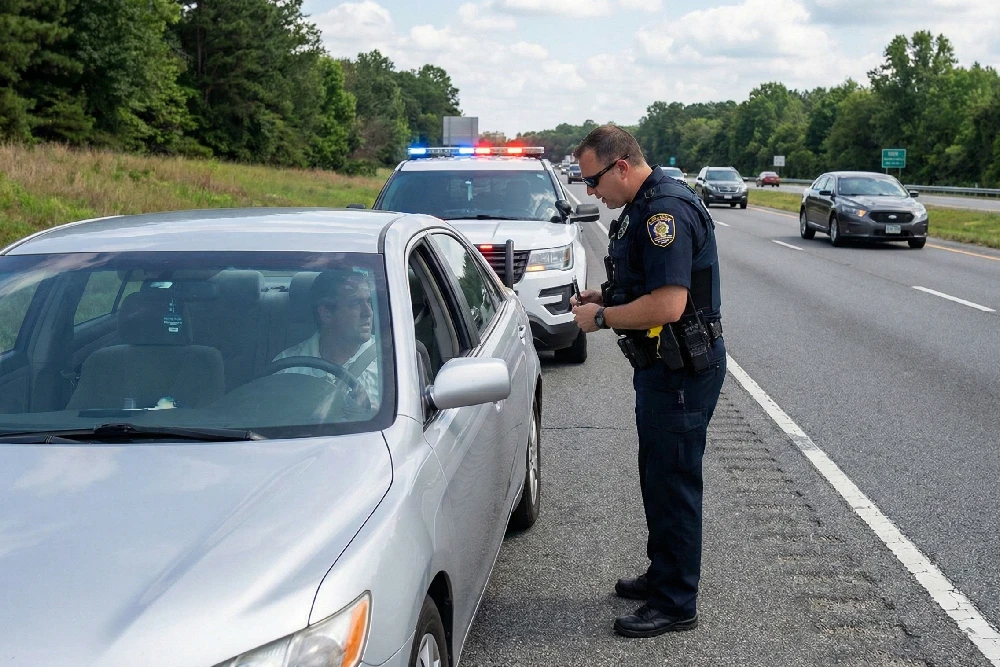
If you live in Bullhead City, Kingman, or Lake Havasu, you know we spend a lot of time in our cars. We drive to work, we drive to the river, and we drive to the store. But seeing those red and blue lights flash behind you can make your heart race. It doesn’t matter if you are 18 or 80. It is scary.
My partner Aline and I have been practicing law since 1982. That is over 40 years. We have helped thousands of people in Mohave County. We have seen good people make small mistakes during traffic stops that turned into big problems.
I want to talk to you today like a neighbor. I want to explain exactly what you should do—and what you should not do—if the police pull you over. We will look at the facts, the rules, and how our lawyers can help if things go wrong.
Key Takeaways
- Stay Calm: Keep your hands on the wheel. Do not make sudden moves.
- Silence is Golden: You must show your ID, insurance, and registration. You do not have to answer questions like “Where are you coming from?”
- No Consent: You can politely say “No” if an officer asks to search your car.
- DUI Rules: In Arizona, you can say no to the roadside gymnastics (field sobriety tests), but saying no to the chemical breath test at the station can cost you your license.
- Ask to Leave: If you aren’t under arrest, ask, “Am I free to go?”
Why Do Police Pull Drivers Over in Bullhead City and Mohave County?
First, let’s look at why stops happen. In our area, we have local police, Mohave County Sheriffs, and sometimes Highway Patrol.
Police need a reason to stop you. In the law, we call this “Reasonable Suspicion.” They can’t just stop you because they feel like it. They need to see you break a traffic rule or have a reason to think a crime is happening.
Common Reasons for Stops:
- Speeding (very common on Highway 95).
- Broken taillights or headlights.
- Expired registration tags.
- Weaving or driving erratically.
A Stat You Should Know: According to the Bureau of Justice Statistics, the most common reason for contact with the police is a traffic stop. In their large survey, they found that about 40% of drivers pulled over didn’t actually know the specific reason why they were stopped until the officer told them.
This creates confusion. When you are confused, you might say things you shouldn’t.
Another interesting number comes from the Stanford Open Policing Project. They found that across the country, police search cars in millions of stops, but they only find illegal items (contraband) in about 30% of those searches. That means in 7 out of 10 searches, the driver had nothing illegal, but their privacy was invaded anyway.
This is why knowing your rights matters.
What Should I Do the Moment I See the Police Lights?
Imagine you are driving home after finding the best burger spot in town. Suddenly, you see lights. What now?
Your goal is safety. You want the officer to feel safe, and you want to keep yourself safe.
- Pull Over Safely: Look for a safe spot. Use your blinker. If it is dark, try to find a well-lit area like a gas station or a parking lot.
- Turn Off the Car: Turn off the engine. Turn on your inside light if it is night.
- Hands on the Wheel: Put your hands at 10 and 2. Keep them there.
- Wait: Do not dig for your wallet yet. If the officer sees you reaching under the seat, they might think you are reaching for a weapon. Wait until they ask for your license.
The “Near Me” Tip: If you are searching on your phone for “coffee shop near me” or “gas station near me” while driving, that is a distraction. In Arizona, holding your phone while driving is illegal. This gives the police a valid reason to stop you. Keep the phone down!
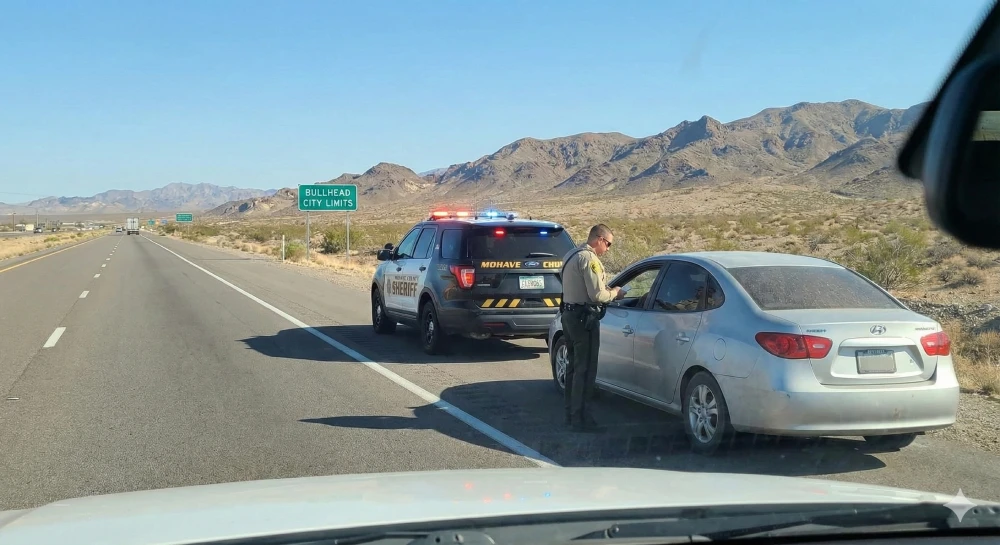
Do I Have to Answer All the Officer’s Questions in Arizona?
This is where things get tricky.
When the officer comes to your window, they will usually ask for three things:
- Driver’s License.
- Vehicle Registration.
- Proof of Insurance.
You must give them these three things. If you don’t, you can get in trouble.
However, then the questions start.
- “Do you know why I pulled you over?”
- “Where are you coming from?”
- “Did you have a drink with dinner?”
Here is the secret: You do not have to answer these questions.
You have the right to remain silent. It is not just something they say in movies. It is real.
If you say, “I was just at a bar,” or “I was rushing home,” you have just confessed. You gave them evidence to use against you.
What to Say Instead: You can be polite but firm. You can say:
“Officer, here is my license and insurance. I would prefer not to answer any questions without my lawyer present.”
Our lawyers at Knochel Law Firm remind clients that you can’t talk your way out of a ticket, but you can talk your way into an arrest.
Can the Police Search My Car Without a Warrant?
Many people think police always need a piece of paper signed by a judge (a warrant) to search a car. That is not always true.
The Fourth Amendment protects you from “unreasonable searches.” But cars are different than houses.
When Can They Search?
- Consent: This is the big one. The officer might ask, “You don’t mind if I take a look around, do you?”
- Your Answer: “I do not consent to a search.”
- Many people say “Yes” because they think it makes them look innocent. But if you have a messy car, or if a passenger left something there you didn’t know about, you are now responsible for it. Never give permission.
- Plain View: If the officer looks through the window and sees a bag of drugs or an open beer can on the seat, they do not need a warrant. They can come in and get it.
- Probable Cause: If the officer smells marijuana or alcohol, or a drug dog alerts on your car, they have “probable cause” to search.
A Data Point on Consent: Studies on policing show that over 85% of people consent to a search when asked, even though they have the legal right to say no. Don’t be part of that statistic. Protect your privacy.
If they search anyway after you said “No,” do not fight them physically. Let them do it. Then, call us. Our lawyers will fight it in court. We can ask the judge to throw out evidence if the search was illegal.
What Are My Rights If the Officer Suspects DUI?
Arizona has some of the toughest DUI laws in the country. In Bullhead City, near the river and casinos, police are very watchful for this.
There are two different types of testing, and it is vital you know the difference.
1. Field Sobriety Tests (The Roadside Gymastics) The officer might ask you to walk a straight line, stand on one leg, or follow a pen with your eyes.
- Your Right: You can politely REFUSE these tests.
- Why? Because these tests are hard to pass even if you are sober. If you are nervous, tired, or have bad knees, you might fail.
2. Chemical Tests (Breath, Blood, Urine) If you are arrested, the officer will ask you to blow into a machine or give blood.
- The Law: Arizona has an “Implied Consent” law (A.R.S. § 28-1321). By driving on our roads, you promised to take this test if arrested.
- The Risk: If you refuse this test after being arrested, your license is automatically suspended for one year, even if you are completely sober.
So, the general advice from many lawyers is: Refuse the roadside exercises, but do not refuse the chemical test at the station or the mobile van.
Read more about our Criminal Law and DUI defense here
What Should I Do If I Am Arrested?
If the handcuffs go on, your job is simple: Stop talking.
Do not try to explain. Do not try to make friends. Say these magic words:
“I am invoking my right to remain silent. I want a lawyer.”
Once you say that, the police are supposed to stop questioning you.
This is where Knochel Law Firm steps in. Our corporate office is right here in Bullhead City. We also have satellite offices in Kingman and Lake Havasu. We practice Criminal Law, so we know the local judges and prosecutors.
We will look at:
- Was the stop legal?
- Did the officer have a reason to search?
- Was the equipment working correctly?
We also practice Personal Injury Law. Sometimes, a traffic stop happens because of a car accident. If you were hurt, we can help with that too. We handle Business Law, Elder Law, Real Estate Law, and Wills and Probate. We have a full team ready to help.
Contact us immediately if you need help
Why Is It Important to Hire Experienced Local Lawyers?
You might think any lawyer can help. But local knowledge matters.
Aline and I have been doing this since 1982. We know the roads. We know the specific intersections in Bullhead City where cameras are. We know how the local courts operate.
We don’t specialize (we are not allowed to use that word!), but we focus our practice on helping the people of Mohave County. When you hire our lawyers, you get a team that fights for you like family.
FAQ: Common Questions Asked to Lawyers in Bullhead City and Arizona regarding Traffic Stops
Here are 5 questions we hear all the time at our office.
1. Can I record the police during a traffic stop in Arizona?
Answer: Generally, yes. You have a First Amendment right to record police in public. However, Arizona passed a law recently restricting how close you can be. You cannot stand right next to them and interfere. If you are the driver, you can record, but do not shove the phone in the officer’s face. Keep your hands visible.
2. What if the officer asks about a weapon in the car?
Answer: Arizona is a “Constitutional Carry” state. You are generally allowed to have a firearm in your car. However, if an officer asks, you should be honest. Tell them, “Yes, I have a firearm located in the glove box.” Do not reach for it! Keep your hands on the wheel. It is for everyone’s safety.
3. Can I just drive away if the officer takes too long?
Answer: No! Never just drive away. However, the Supreme Court has ruled (in a case called Rodriguez v. United States) that a traffic stop cannot last longer than necessary to write the ticket. They cannot hold you for an hour just to wait for a drug dog if they don’t have a reason. You can ask, “Officer, am I free to go?” If they say no, ask, “Why am I being detained?”
4. I was stopped at a Border Patrol checkpoint near the river. Is that legal?
Answer: Yes. We live near the border and state lines. Checkpoints are legal, but their power is limited. They can ask about your citizenship status. They usually cannot do a full search of your car unless they have probable cause or you give consent.
5. Does the smell of marijuana give police the right to search my car in 2025?
Answer: This has changed! Since Arizona voters passed Proposition 207 (Smart and Safe Arizona Act), the smell of burnt marijuana alone is often not enough to justify a warrantless search, because it is legal for adults to use it. However, if they see you smoking it while driving (which is illegal DUI), that is different. This is a complex area of law, and if this happens to you, call our lawyers.
External Resources
- Arizona Revised Statutes Title 28 (Transportation Laws)
- Arizona Department of Public Safety
- Mohave County Courts
Disclaimer: This blog post is for informational purposes only and does not constitute legal advice. Reading this does not create an attorney-client relationship. Every case is unique. For specific advice regarding your situation, please contact Knochel Law Firm directly.
Knochel Law Firm Bullhead City | Kingman | Lake Havasu Since 1982 https://lawyersinarizona.com/