
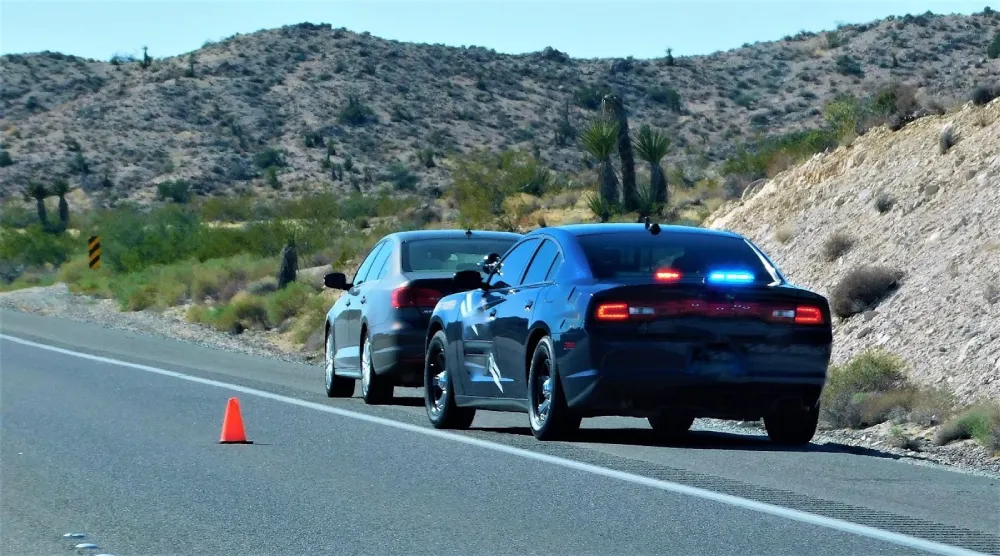
A DUI arrest in Bullhead City can feel like the world has stopped. One moment you are driving home, and the next you are handcuffed, placed in a patrol car, and trying to process what is happening. The fear, confusion, and shame can be overwhelming. But in those first chaotic hours, the decisions you make — or fail to make — will have a direct impact on whether you walk away from this with your driving privileges, your freedom, and your future intact.
If you are searching for a Bullhead City DUI lawyer right now, you are taking the right step. This guide is designed to walk you through exactly what to do in the first 24 hours after a DUI arrest in Arizona, what the Mohave County arrest process looks like, and how an experienced DUI attorney can make a genuine difference in the outcome of your case. At Knochel Law Firm, we have represented clients throughout the Tri-State area — Arizona, Nevada, and California — in DUI matters ranging from first-offense misdemeanors to felony aggravated DUI charges. We know what it takes to build a strong defense.
The Problem: Arizona’s DUI System Is Built to Move Fast — Against You
Most people who are arrested for DUI in Arizona have never been through the criminal justice system. They have no frame of reference for what is about to happen or how quickly it will happen. Arizona’s DUI laws are designed to act fast, and the consequences begin accumulating almost immediately after the arrest.
Within hours of your arrest, your license may be confiscated and replaced with a temporary permit. Arizona’s administrative license suspension process — separate from any criminal penalties — begins automatically. The Arizona Department of Transportation (ADOT) will move to suspend your driving privileges even before you have been convicted of anything, operating on an independent timeline from your criminal case.
Arizona DUI penalties in 2026 are among the harshest in the country. A standard first-offense DUI — with a blood alcohol concentration (BAC) between 0.08% and 0.149% — carries a minimum of 10 consecutive days in jail (though 9 of those days may be suspended upon completion of alcohol screening and treatment), fines and fees that commonly exceed $2,500, mandatory installation of an ignition interlock device (IID) for at least 12 months, and license suspension. These are the minimums for the least serious category of DUI offense.
An Extreme DUI — BAC of 0.15% or higher — carries mandatory minimum jail time of 30 days, significantly higher fines, and an 18-month IID requirement. A Super Extreme DUI, with a BAC of 0.20% or higher, carries even more severe mandatory penalties. An Aggravated DUI — which applies when a driver is stopped while their license is already suspended, when a minor under 15 is in the vehicle, or when it is a third DUI within 84 months — is a Class 4 or Class 6 felony in Arizona, with potential prison sentences.
Beyond the legal penalties, a DUI conviction carries professional consequences. Many careers — healthcare, education, law, finance, commercial driving — have licensing requirements that are directly affected by criminal convictions. Immigration status can be affected. Professional licenses can be suspended or revoked. The collateral consequences of a DUI conviction extend far beyond the courtroom.
All of this is happening on a timeline that begins the moment the arresting officer initiates the traffic stop. Understanding your rights and taking the right actions in the first 24 hours can mean the difference between a conviction and a dismissed case, between a suspended license and the ability to continue driving to work.
The Legal Landscape: Arizona DUI Law and the Mohave County Arrest Process in 2026
Arizona’s primary DUI statute is Arizona Revised Statutes 28-1381, which makes it a crime to drive or be in actual physical control of a vehicle while under the influence of intoxicating liquor, any drug, or a vapor releasing substance, or while having a BAC of 0.08% or greater. Note the phrase ‘actual physical control’ — in Arizona, you do not have to be driving a moving vehicle to be charged with DUI. Sitting in the driver’s seat of a parked car with the keys accessible may be sufficient.
Arizona operates under an implied consent law, codified at ARS 28-1321. By driving on Arizona roadways, you have legally consented to submit to a blood, breath, or urine test if a law enforcement officer has reasonable grounds to believe you are driving under the influence. Refusing to submit to a test results in an automatic 12-month license suspension for a first refusal — and the refusal itself can be introduced as evidence of consciousness of guilt in your criminal case.
The Mohave County arrest process for DUI typically follows this sequence: a traffic stop based on observed traffic violations, erratic driving, or a checkpoint; field sobriety tests (horizontal gaze nystagmus, walk-and-turn, one-leg stand); a preliminary breath test at the roadside; arrest if probable cause is established; transport to a law enforcement facility; a formal chemical test (blood draw or evidentiary breath test); booking and processing; and either release on your own recognizance, release on bail, or detention until arraignment.
In 2026, Mohave County law enforcement has expanded its use of drug recognition experts (DREs) — officers specially trained to evaluate drivers for impairment by drugs other than alcohol. This matters because DUI charges in Arizona are not limited to alcohol. Prescription medications, cannabis (even legally obtained), over-the-counter sleep aids, and controlled substances can all form the basis of a DUI charge, and the evidence gathered in those cases is different from a standard breathalyzer reading. A Bullhead City DUI lawyer with experience in drug-related DUI cases is essential if your arrest involves any substance other than alcohol.
The administrative license suspension process runs on a completely separate track from your criminal case. Under Arizona law, you have exactly 15 calendar days from the date of your arrest to request an administrative hearing with the Arizona Motor Vehicle Division (MVD) to contest your license suspension. If you miss this deadline, your license will be automatically suspended on the 16th day, regardless of the status of your criminal case. This 15-day deadline is one of the most important reasons to contact an attorney within hours of your arrest, not days.
Your Rights During and After a DUI Arrest
Understanding your constitutional rights during the arrest process is not just a legal formality — it is practical protection that can directly affect the outcome of your case. Here is what you need to know.
The Right to Remain Silent: The Fifth Amendment protects you from being compelled to testify against yourself. You are not required to answer questions beyond providing your name and identification. Every explanation, every detail about where you were, what you drank, and how you feel is potentially incriminating. Politely but clearly state that you wish to remain silent and that you want an attorney.
The Right to an Attorney: The Sixth Amendment guarantees your right to legal representation. Invoke this right clearly and immediately. Law enforcement must stop questioning you once you assert your right to counsel. Do not answer questions while waiting for an attorney to arrive.
The Right to Refuse Field Sobriety Tests: In Arizona, you are not legally required to submit to field sobriety tests (the walk-and-turn, one-leg stand, etc.). These tests are voluntary and are primarily tools for gathering evidence against you. Refusing them may be used against you in court, but so can failing them — and field sobriety tests are notoriously subjective.
The Implied Consent Obligation: Unlike field sobriety tests, chemical tests (blood, breath, or urine) are governed by Arizona’s implied consent law. Refusing a lawful chemical test results in an automatic license suspension and potential use of the refusal as evidence. This is a difficult judgment call that should be made with legal guidance.
Key Steps: What to Do in the First 24 Hours
1. Stay calm and comply physically: Do not resist the stop, the arrest, or the booking process. Physical resistance creates additional criminal charges and makes everything worse. Compliance with lawful instructions is not an admission of guilt.
2. Exercise your right to remain silent immediately: Clearly state that you wish to remain silent and that you want an attorney. Then stop talking. Do not try to explain yourself, minimize what happened, or be polite at the expense of your rights.
3. Note everything you can remember: As soon as you are able — in writing, in a voice memo, or by telling your attorney — document everything: the location of the stop, what the officer said, whether you were read your Miranda rights, what tests were administered, how those tests were conducted, and any other details that might be relevant.
4. Contact a Bullhead City DUI lawyer immediately: Do not wait until morning. Do not ask a family member to look up information online. Contact an attorney who handles DUI cases in Mohave County as soon as you have access to a phone. The sooner your attorney can begin reviewing the evidence and protecting your rights, the better your outcome will be.
5. Do not post anything on social media: Any post — a check-in, a photo, a comment, or even a vague reference to your situation — can be found and used by prosecutors. Stay completely silent on all platforms until your case is resolved.
6. Secure the MVD hearing request: Your attorney will handle this, but understand the urgency: the 15-day deadline to contest your administrative license suspension begins the day of your arrest. This is not a deadline that can be extended or waived. Missing it means automatic suspension.
7. Make arrangements for practical needs: If your vehicle was impounded, arrange for its retrieval before storage fees accumulate. If you need transportation to work, make arrangements. If you have children who need care, ensure that is covered. Then focus on your legal matter

How a Bullhead City DUI Lawyer Builds Your Defense
A strong DUI defense is not simply about arguing that you were not drunk. It is a methodical examination of every step of the arrest process to identify constitutional violations, procedural errors, and evidentiary weaknesses that can lead to charges being reduced or dismissed entirely.
Challenging the traffic stop: Law enforcement must have reasonable articulable suspicion — a specific, observable behavior — to initiate a traffic stop. If the stop was unlawful, all evidence gathered as a result of that stop may be suppressed under the Fourth Amendment’s exclusionary rule.
Challenging the field sobriety test administration: Field sobriety tests must be administered according to standardized NHTSA guidelines. Deviations from those guidelines can undermine the validity of the results. Medical conditions, uneven pavement, improper footwear, and officer errors can all affect performance on these tests.
Challenging the chemical test: Breathalyzer devices must be properly calibrated, maintained, and operated by certified personnel. Blood draws must follow strict chain-of-custody protocols. Errors in any of these procedures can make the test results inadmissible.
Challenging the BAC reading itself: Rising BAC — the phenomenon where your BAC was still rising at the time of the test and was actually lower when you were driving — is a recognized defense in appropriate cases. Medical conditions, dental work, and certain diets can also affect breathalyzer readings.
Every DUI case is different, and the defenses available to you depend on the specific facts of your situation. An experienced DUI attorney will review the dash camera footage, the officer’s report, the calibration records for the testing device, the chain of custody for any blood sample, and every other piece of evidence in the case.
Why a Tri-State Approach Matters for DUI Defense
Bullhead City sits on the Arizona-Nevada border, and many residents of the area commute across state lines, work in both states, and have professional licenses that may be affected by a DUI conviction in either state. The Driver License Compact means that Arizona is required to report your DUI conviction to your home state’s motor vehicle authority — which can trigger separate administrative proceedings, additional license suspensions, and even enhanced penalties in states with reciprocal DUI laws.
Knochel Law Firm represents clients throughout the Tri-State area — Arizona, Nevada, and California. Our attorneys understand how a DUI conviction in Arizona can affect your Nevada driver’s license or your California commercial driving credentials. We build defense strategies that account for the full scope of your situation, not just the immediate Arizona case. If you are looking for a DUI attorney near me with genuine Tri-State experience, Knochel Law Firm is the right call.
Frequently Asked Questions About DUI Arrests in Mohave County
Can a DUI be dismissed in Arizona? Yes. DUI charges can be dismissed or reduced when the arrest was unlawful, the testing process was flawed, or the evidence does not support the charge beyond a reasonable doubt. An experienced attorney will evaluate every available defense.
What happens to my commercial driver’s license (CDL)? A DUI conviction in any vehicle will disqualify a CDL holder for at least one year under federal regulations. CDL holders should treat a DUI arrest as an emergency requiring immediate legal attention.
What if I was arrested at a DUI checkpoint? Sobriety checkpoints are legal in Arizona under specific conditions. However, the checkpoint itself must comply with strict legal requirements. Your attorney can review the checkpoint procedures to determine whether your stop was lawful.
Will I have to go to jail even for a first offense? Arizona mandates a minimum of 10 consecutive days for a standard first DUI conviction, though 9 of those days may be suspended. Alternative sentencing programs are available in some cases. Your attorney can advise you on the options available in Mohave County.
| Ready to Speak With a Knochel Law Attorney?A DUI arrest is not a conviction. The decisions made in the first 24 hours — and the quality of the legal representation you secure — can profoundly affect the outcome. Do not face the Mohave County court system alone. Knochel Law Firm’s DUI defense attorneys are ready to fight for you. Visit: https://lawyersinarizona.com/ Call today for a confidential, no-obligation consultation. |